
• Rio de Janeiro Specials

    Posted on janeiro 3, 2011 by in br, en

    [Christ the Redeemer statue, named one of the New Seven Wonders of the World.]When visiting such a diverse city as a Rio de Janeiro, you want to be able to make the most of it, in the time you have. We offer a large choice of tours in and around Rio, we will give you the opportunity to experience Rio the way you would like to experience it. You may wish to visit Christ the Redeemer and see some of the most spectacular views of Rio, or you may prefer to explore the waters around Rio and set yourself  free in the crystal clear  seas.

    Whatever  your preferences are we have the tour to delight you. 

     TOURS IN & AROUND RIO : Tours are operated daily in  private or regular  (shared) basis. Individual or group, please ask for a quote.

    Angra dos Reis. ( option:  by helicopter )

    365 islands, one for each day of the year, and 2000 beaches at your disposal. Superb nature in one of the most beautiful places on the outskirt of Rio de Janeiro.

    Special interest: snorkeling, scuba-diving,  schooner trip & fishing.

    Take a helicopter tour from Rio to Angra dos Reis & Paraty

     -


    Bird Watch.

    Brazilian Tanager

    Birds constitute the most widespread group that can be visualized in its natural habitat, since they are colorful, attractive, interesting and charming animals. Besides all these attributes, many species can sing copiously, inspiring the soul of the artists and giving pleasure to generations of people all over the globe.

    Such activity can also constitute an inexhaustible source of pleasure and leisure for those who want to have an interesting hobby in a way they can delight themselves, to entertain and to learn with the incredible beauty of our birds.

    The State of Rio de Janeiro has much to offer the visiting birder, from the coastal Restinga to the high altitude peaks of the Atlantic rainforest rising to a rugged and impressive 2,400 metres ( 3.840 ft ). If you are considering a trip to south-east Brazil you should allow yourself a minimum of 12 days to cover some of the key areas, habitats and sites.

     Lodges: Serra dos Tucanos – Cachoeiras de Macacu/Rio de Janeiro.

                      Regua – Guapiassu – Guapi Assu/Rio de Janeiro

    Please contact us for further information about where to stay plus  special packages with transfers from airport to lodge & V.V.

     Botanical Garden.

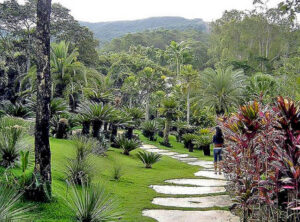
    Comfort and leisure for all ages A true ecological sanctuary. This would be a fair definition of the Rio de Janeiro Botanical Gardens, one of the ten most important in the world. Besides housing the rarest species of plants from the flora of Brazil and other countries, it is also an excellent leisure option for children and adults and a delight for those who wish to contemplate nature.
    Along the two centuries of existence, the Gardens have been given the names of Real Horto, Real Jardim Botãnico, Jardim Botânico do Rio de Janeiro and, in 1996 they have become the Instituto de Pesquisas Jardim Botânico do Rio de Janeiro (Botanical Gardens of Rio de Janeiro Research Insitute).

    Buzios. ( option: by helicopter)

    Búzios is home to more than 20 magnificent beaches with crystal-clear waters which are complemented in perfect harmony with the sculptured landscape and exotic vegetation. Originally settled by European pirates and slave traders, this historically diverse city enjoyed periods of prosperity and emerged as one of Brazil’s most picturesque fishing villages. Buzios was elected one of the 10 most beautiful areas in the world and is famed for its unique combination of rustic charm, distinctive archictecure, incredible allure, and sophisticated restaurants and boutiques. Every year thousands of visitors come from all corners of the world to savour the city’s magic.

    Christ Redeemer.

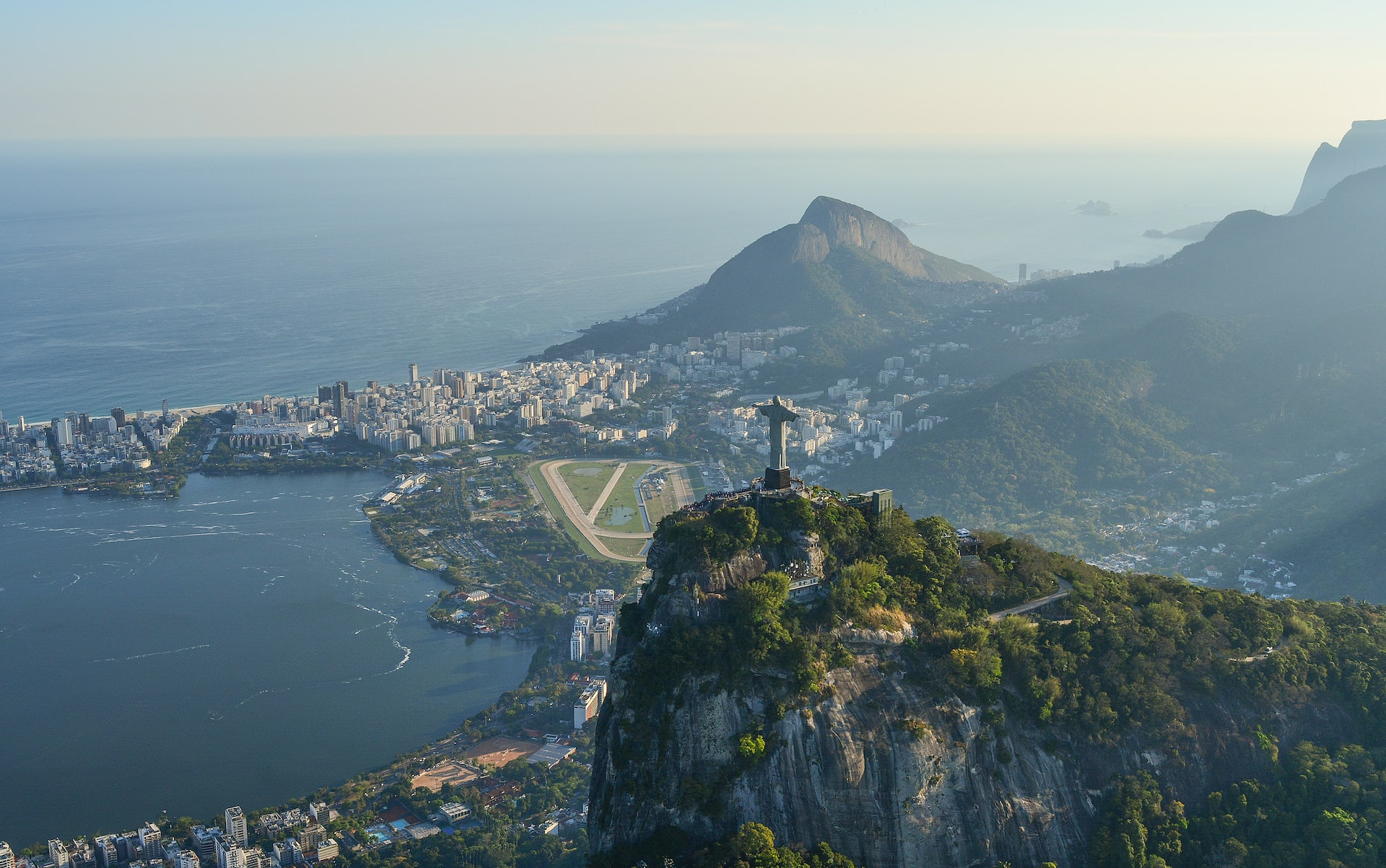
    The monument  is located at the top of Corcovado / Hunchback  Mountain at 710m /2.330ft. The entire monument of Christ the Redeemer is 38m / 114ft high with the statue accounting for 30m / 90ft and overlooking the city of Rio de Janeiro is one of the tallest statues in the world; the span from finger tip to finger tip is 28m / 84ft and there is a small chapel housed in the base.

    Christ the Redeemer was designed by a French sculptor by the name of Paul Landowski and a local engineer named Heitor da Silva Costa was chosen to supervise the entire construction. The statue was built not out of steel but from reinforced concrete as that was considered a more suitable material for the cross shaped statue. The external caps of the idol were constructed in soapstone due to the resistance of this material to the extreme time and also due to its malleability.

    Christ the Redeemer, the most important monument of the Catholic parishioners waits for the visitors of the whole world with the opened arms.

    Climbing.

    Huge numbers of people climb the Sugar Loaf when they visit Rio de Janeiro to enjoy the incredible views of the city, beaches and more spread out below at the foot of the mountain. It is possible to  see Rio from very special angles….Copacabana, Praia Vermelha, and Niterói beaches in the horizon, across Guanabara Bay.

    In the photo, a climber has reached a vantage point overlooking Praia Vermelha, the beach betweeen Morro da Urca and Morro da Babilônia.

    Other option to climb is Good Finger /Dedo de Deus-Teresopolis with 1.692m / 5.549 ft


    Favela/slum tour . -

    View of the Favela

     While in Rio please take a chance to visit one of  the biggest community located a few miles from Copacabana and Ipanema….ROCINHA

     You will feel welcome there, talking to friendly people, walking along the streets, alleys, visiting some houses and learning more about this aspect of Brazilian culture.  This incursion is totally safe and lasts about 2 hours, and a bilingual tourist guide will assist you to communicate with the locals.
    Many of the main samba schools in Rio come from these communities.

    Guanabara Bay by schooner.

    [Downtown Rio.]

    Guanabara Bay was first discovered in 1502. Explorers from Portugal actually mistook the bay for being the mouth of a large river and they arrived in January ,as such, Rio de Janeiro got its name. Regardless of what these early explorers thought the bay was, they must have been very impressed by its splendid setting. As for the size of Guanabara Bay, it is seventeen miles wide and nineteen miles long at its maximum.

    Wonderful views from the  Bay can be enjoyed from any number of vantage points, the neighborhoods of  Botafogo, Flamengo, Urca. Sugar Loaf, Fort São João, Santa Cruz Fortress, Contemporary Art Museum, Rio- Niterói bridge, Fiscal Island and more.

     Hang gliding ( tandem flight ).

    Located a few minutes away from the Southern part of the City of Rio de Janeiro, Tijuca National Park’s Pedra Bonita ridge is one of the world’s most beautiful and safe take-off spots. The flight will take you above centuries-old Atlantic Forest trees, gigantic granite monoliths, celebrity manors, the sea; you’ll be flying high enough to see the city from angles that only those bird-men can.


     Hiking.

    There are some excelent  areas for hiking in and around Rio. We strongly recommend not to do it in your own unless if you know your way. Get a local guide or a Carioca friend that knows the area, it  is extremely important.

    We provide hiking at the following spots :Christ the Redemmer, Morro da Urca /Urca Hill and Tijuca Forest. Also we can have a great hiking at Três Picos-Boca do Mato/ Cachoeiras de Macacu.


    Historical city tour.

    Municipal Theatre

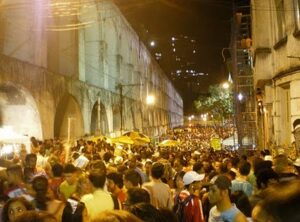
    Lapa, a neighbourhood at the historic centre of Rio, is most well-known for its collection of monuments. Two of these are the Arcos da Lapa which is also known as the Carioca Aqueduct, and the Passeio Público which is the oldest public park in Brazil. There’s no doubt that you’ll visit Lapa in the daytime during your stay in Rio, but don’t forget to go back once the sun sets when this popular neighbourhood really comes alive. Home to numerous bars and clubs, it also boasts live music venues and much, much more.

    Ilha Grande.

    It is  located off the coast of Rio, part of the municipality of Angra dos Reis. The island is largely undeveloped and noted for its scenic beauty, which includes tropical beaches, luxuriant vegetation and a rugged landscape. The land area is 193 km² and the highest point is Pico da Pedra D’Água, at 1031 m. It once held a notorious prison, now closed.

    The entire island is a protected area, with most of its territory included in Ilha Grande State Park, and the rest subject to stringent development restrictions. Small-scale ecotourism, however, is encouraged, and the island, which is roadless and off-limits to cars, features over 150 km of hiking trails connecting the handful of coastal villages and hamlets, where lodging is available, to one another and to the many beaches, mountain peaks, waterfalls, and pristine forests.

    The largest village on the island is called Vila do Abraão, with 1900 inhabitants. Most of the visitor facilities and the park headquarters are located there. The village can be reached from the mainland by local ferries and fast catamarans.

    Maracana Football Stadium tour. 

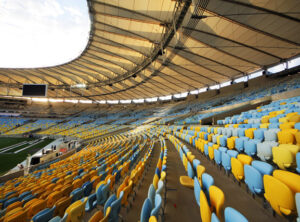
    Brazil’s temple of soccer easily accommodates more than 100,000 people. On certain occasions, such as the World Cup match of 1950 or Pelé’s last game, it has squeezed in close to 200,000 crazed fans – although it’s now been modified to hold fewer. If you like sports, if you want to understand Brazil, or if you just want an intense, quasi-psychedelic experience, then by all means go see a game of futebol – preferably a championship game or one between local rivals Flamengo, Vasco, Fluminense or Botafogo. There’s a sports museum (open 9am to 5pm Monday to Friday) inside the stadium. It has photographs, posters, cups and the uniforms of Brazilian sporting greats, including Pelé’s famous No 10 shirt. There’s also a store where you can buy soccer shirts. Enter through gate 18 on Rua Professor Eurico Rabelo.

     The World Cup Final 2014 is not the sole reason that Maracanã is being refurbished. Just two short years after hosting the final of sport’s biggest competition, the new stadium will be the venue for the opening and closing ceremonies of sport’s oldest competition – the 2016 Olympic Games.

    Reveillon no Rio de Janeiro

     New Year’s Eve is Rio de Janeiro’s second most popular holiday. Like Carnival, New Year’s Eve (or Réveillon) requires advance planning and August is a great time to get started, as that’s when several hotels release their New Year’s packages.

    Special packages & prices please contact us.


     Paraty ( option: by helicopter) .

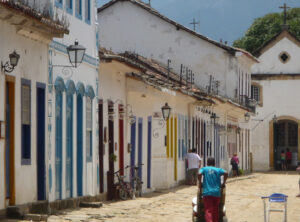
     Centro Histórico Paraty, also spelled Parati, is a lovely colonial town, 125 miles from Rio de Janeiro on Ilha Grande Bay, Brazil’s southeastern coast. It lies on the border between Rio de Janeiro and São Paulo states.

    It’s a favorite with Brazilians and visitors who want to get away from it all in an historic town, laze on one of the many beaches, and indulge in a restful vacation.


    Centro Histórico

    In the 1700′s when the mines of Minas Gerais were pouring out gold, the perfect bay of Paraty was a busy port, the second most important in Brazil during the Ciclo de Ouro, or Golden Century. It was a hard overland trip, though, and when a new road was built to another port in Espiritu Santo state, Paraty was all but forgotten. This stage of oblivion or neglect is what kept so many of the colonial buildings pretty much as they were when the last gold-laden ship sailed for Portugal.


    Centro Histórico

    Old town, the historic center is a national historic monument. Closed to vehicles, the streets and buildings are preserved. When the city was founded in 1531, the founders named Nossa Senhora dos Remédios as the patron saint and built this church in her honor. Enlarged and remodeled over the years, the church is now the focal point of the annual Festa de Nossa Senhora dos Remédios on


    September 8. The festa has been celebrated for over 300 years since a wealthy and reverent benefactor, Maria Jácome de Mello, donated the land to the town for the church, requesting only an annual mass in return. The mass has grown into a procession of the wooden effigy of the Virgen, adorned with gold and silver jewelry, though the town.

    Petropolis ( The Imperial City ).

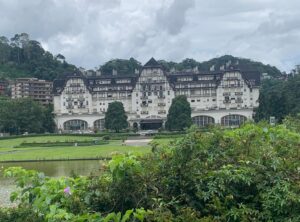
    High in the hills behind Rio there are a tiny town where the Brazilian Imperial Family once spent its summers.The former Petropolis Imperial City, located at the “Orgãos” Mountain, is only one hour from Rio de Janeiro. A short trip to the mountains, sub-tropical vegetation by the wayside. Arrival in Petropolis, a typical small town with streets paved with cobblestones, horses-drawn buggies no different from those in use at the turn of the century. A visit to the old cathedral and to the Summer Palace of Dom Pedro II, Brazil’s last emperor. The palace is now a museum, housing a beautiful collection of the crown jewels, furniture, pintings and tapestries from the days of the Empire.
    With its refreshing mountain climate and magnificent views, Petrópolis at an altitude of 809 meters above sea level, is just 53 kilometers from Rio along a modern highway.
    Perfect for a day trip, visitors eager to enjoy this mountain climate and explore the archicterure and nature.
    During your stay, you can also visit the Crystal Palace, the Sao Pedro de Alcantara Neo Gothic Cathedral and the house of Santos-Dumont. Alberto Santos-Dumont, a turn-of-the-20th-century Brazilian aviator… (the inventor of the airplane).

    Rio by bicycle.

    Copyright © Douglas Engle info@australfoto.com

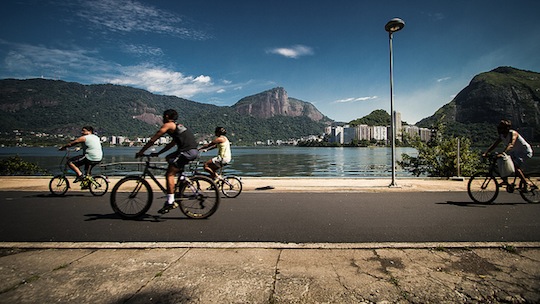
    Overall in Rio  the cycling seems very casual. You will mainly see single speed bikes with plenty of baskets for carrying things. The bike is largely seen along the beaches of Copacabana and Ipanema as well as along the Lagoon Rodrigo de Freitas.


    Rio by night at Lapa . 

    For the complete Bohemian experience, a visit to the Lapa neighborhood of Rio at night cannot be missed, especially if you are a night owl. Lapa is unquestionably the best nightlife district in the city. Every street corner, pub, nightclub and bar will have a group of revelers dancing the night away. In the years gone by, Lapa was the favorite haunt of writers and poets who gathered in the neighborhood to open their thoughts on .  

    In Lapa you can sway to the samba all night long at clubs like Carioca da Gema or move over to Rio Scenarium for some MPB, Chorinho, forro, alternative music and live samba bands, in settings that Salvador Dali would be proud of. The very fact that cariocas from Ipanema and Leblon come to Lapa to party is proof enough of the neighborhood’s prowess as a party zone. Friday and Saturday nights are the liveliest if you are looking for a really good time on the party circuit. Samba and Brazilian hip-hop are most popular at bars so you won’t find it difficult to settle in for the night if those are styles that suit you.

    Rio by helicopter. 

    This is a rare opportunity for you to see Rio de Janeiro from the air, the city nestled against the backdrop of powerful granite mountains, the Atlantic Ocean twinkling at their feet.

    The flight takes in the Maracana Stadium, the golden beaches of Ipanema and Copacabana, the Christ Statue on Corcovado Mountain, the Sugar Loaf and the Rodrigo de Freitas lake. Besides these incredible views, you will also be able to take some of the most spectacular photos of your visit to Rio.

     Santa Teresa.

    [Santa Teresa tram over the aqueduct arches]

    Santa Teresa holds a special place in Rio de Janeiro’s affections. Santa, as it’s known locally, is a hilltop district steeped in the past, an artsy bairro that although not too close to the beach is endowed with countless vantage points and home to a loving, combative community that’s always eager to defend its cultural heritage.

    The image of the Santa Teresa tram running on the Lapa Arches is a reminder of the ties between the district and neighboring Lapa, which were intensified in the first half of the twentieth century.

    Both districts lured intellectuals and artists. Great names of Brazil arts, music and poetry enjoyed drinking at Lapa’s cabarets or attending Santa Teresa soirées.

    Let´s  discover those ties as you go back and forth between Santa Teresa’s art studios, restaurants and cultural venues and the great Lapa nightlife.

    Sugar Loaf.

    Sugar Loaf received its name in the 17th century, due to its resemblance to the cone shaped blocks of unrefined sugar that were prepared for shipment from Brazil to Portugal.

    The  summit is reached   by taking a 2 stage cable car that leaves from Praia Vermelha every 15 minutes or so. The first stop will be at  Urca Hill where visitors are able to have  superb views towards Botafogo and Flamengo beaches . There is a nice paved nature trail that is worth walking, to see the tropical vegetation, birds, and the occasional momersets.

    The Urca Hill  also holds very popular summer concert series, which start late in the evening usually on friday and saturday.  Some first rate bands play there, and the party continues until dawn, well after the band has left the stage.

    The second stage cable car will take you to the summit of the Sugar Loaf  located at 390m /1200ft  is from where  you will have the most fantastic views of Rio including Copacabana beach.  There are souvenir shop and kiosk that serves soft drinks, ice cream,  snacks , beer and caipirinha.

    Tijuca Forest. 

    From the top of Rio de Janeiro’s towering mountain of Corcovado, at the feet of the iconic Christ the Redeemer statue, the high rise urban centers neatly tucked along the shoreline are dwarfed by the rugged natural skyline. On these peaks, for as far as the eye can see, grows the dense jungle of the Tijuca Forest — the largest urban forest in the world covering about 3.200 hectares which gives Rio the feel of city that has managed to coexist with nature like none other on the planet.

     Tropical Island.

    Rio de Janeiro Boat Tour - Rio de Janeiro

    Cruise beautiful Sepetiba Bay on a day trip from Rio de Janeiro. You’ll travel from Rio de Janeiro to Itacuruca, where you’ll board a schooner to cruise the wildlife-filled waters of Sepetiba Bay. Aboard your schooner (locally known as a saveiro), you’ll be served a selection of  tropical fruit of the season. A bar is available on the boat, but beverages are not included in the tour price. Your cruise on Sepetiba Bay takes you through an area that’s rich in natural beauty, and it is common to spot dolphins, giant kingfishers, parrots, turtles and stingrays.

    After stopping for a swim, you will continue to a tropical island where a delicious buffet lunch will be served. After lunch, you will have time to explore the island before returning to Itacuruca inorder to board your  coach back to Rio.


    RIO DE JANEIRO CARNIVAL ….The World´s biggest party.

    Carnival  at the Sambadrome.

    Carnaval 2011 Pacotes%Although Carnival (Carnaval in Portuguese) is celebrated in towns and villages throughout Brazil and other Catholic countries, Rio de Janeiro has long been regarded as the Carnival Capital of the World. The Rio Carnaval is not only the biggest Carnival, it as also a benchmark against which every other carnival is compared and one of the most interesting artistic events on the Globe.

    Schools are ranked hierarchically into 6 levels or groups: SPECIAL, A, B, C, D and E. Each group contains between 8 and 15 Schools which compete among themselves to be the group-champion of the year. There is also the JUNIOR Schools group, which is currently composed by 18 Schools.

    The top groups to parade in the Sambadrome are the SPECIAL one plus A and B groups.

    Every year the champion Schools of each group are promoted to the immediately superior groups and the Schools to score the least points are downgraded to the immediately inferior group.

    Therefore all Schools strive to improve their positions within the general contest and to become group champions. The champion of the Carnival is the champion of the SPECIAL GROUP.

     Street Carnival.

    It is a question of bringing together millions of revelers dressed with costumes made at home, shirts printed with names of the band or group they are parading for, or simply dressed with beach clothes. People from Rio, Brazilian or foreign tourists, whoever… they are all in the streets, avenues and squares to sing and to dance on the samba rhythm!

    Open-air-fun, irreverence, simplicity and great joy characterize these street bands and groups arisen from meetings of neighbors, colleagues, or just friends who meet themselves on the beach. The street bands and groups are very similar to Samba School guilds in terms of organization. They concentrate themselves in a place previously arranged, where people meet themselves and wait for parading on a determined path inside the neighborhoods to which they belong, drawing who has the enough energy to go along with. Because the greatest part of the parades occurs during the day (in the morning or in the afternoon) it is appropriate for people of all ages (since children to elderly).

    Post Tagged with ,

Deixe uma resposta

O seu endereço de email não será publicado Campos obrigatórios são marcados *

*

Você pode usar estas tags e atributos de HTML: <a href="" title=""> <abbr title=""> <acronym title=""> <b> <blockquote cite=""> <cite> <code> <del datetime=""> <em> <i> <q cite=""> <strike> <strong>